Paver Patio vs. Concrete: What Lasts in Houston?
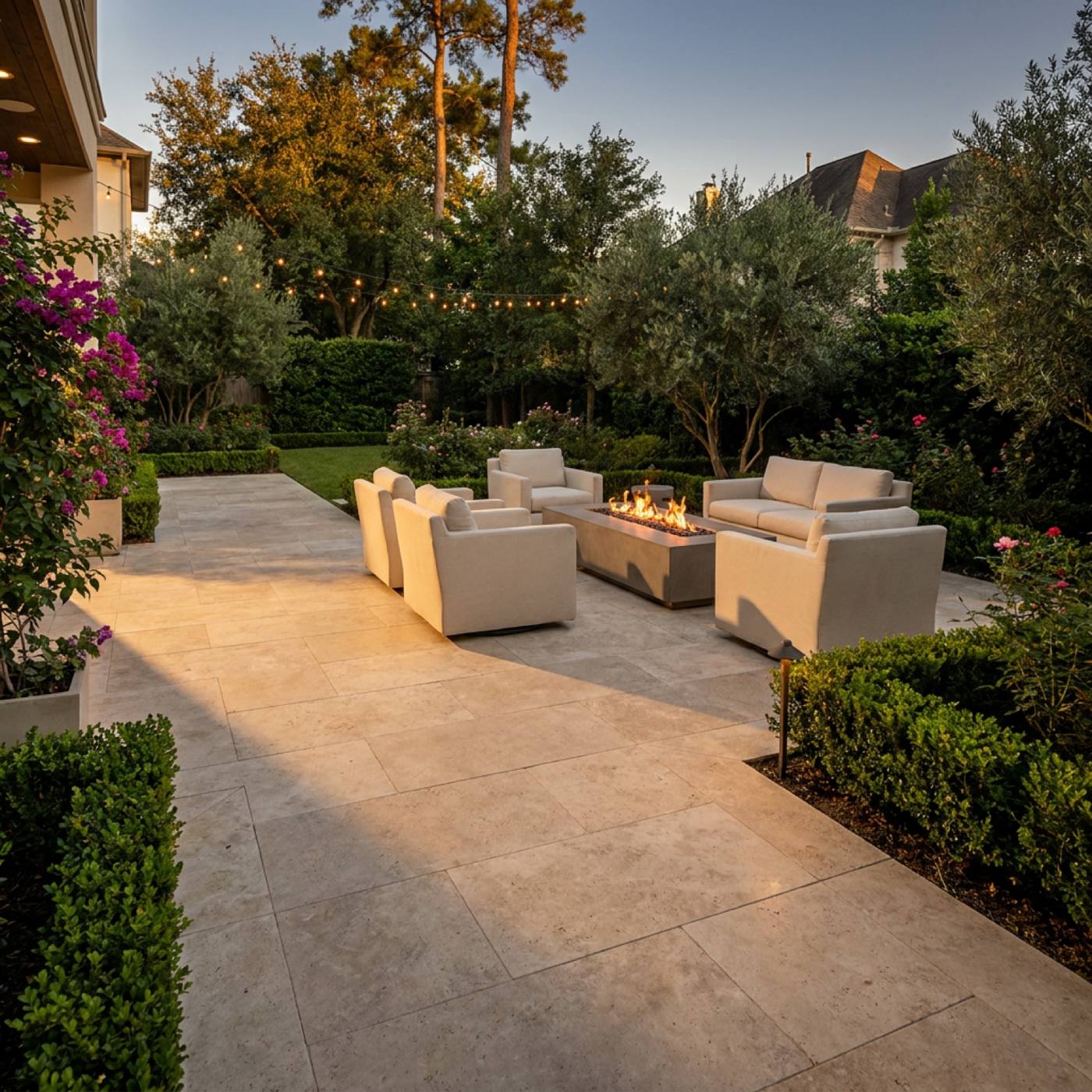
On paper, poured concrete wins on price and pavers win on looks. In Houston, the real difference shows up three to five years in, and it comes down to one thing most people underestimate: the ground underneath.
The soil is the whole story
Greater Houston sits on expansive clay that swells when it rains and shrinks when it dries. That constant movement is why you see cracked slabs and heaved driveways all over the city. A large poured slab is a single rigid surface, so when the ground moves, the slab cracks. There is no way around it over enough seasons.
A paver patio is made of many small units set over a compacted base with sand between them. When the ground moves, the pavers flex with it instead of cracking. If one section ever settles, individual pavers can be lifted and reset, which is not an option with a slab.
Cost over ten years, not day one
Concrete is usually thirty to forty percent cheaper to install. If you are staying a couple of years or the patio is small and low stakes, that can be the right call. But over ten years in Houston clay, the honest comparison includes crack repair, potential mud jacking, and the fact that a stained cracked slab often just gets torn out. Pavers cost more up front and tend to still look right a decade later.
When we recommend each
We install both, and we will tell you honestly which fits your yard. The base and the drainage matter more than the surface you choose, and that is the part cheaper installers skip.
- 01Choose concrete when the area is small, the budget is tight, or the look is secondary, and accept some cracking over time.
- 02Choose pavers for anything that anchors the yard, sits near the house, or needs to hold its look, especially larger patios and anything you are investing real money around.
- 03Either way, insist on a proper compacted base and a real drainage plan. In Houston that is what determines whether the patio lasts, not the material on top.